Wholesale glass drinking bottles are becoming increasingly vital in a world prioritizing sustainability and hygiene. From beverage companies seeking eco-friendly packaging to individuals embracing a healthier lifestyle, the demand for high-quality, reusable glass bottles is surging globally. This increase is driven not only by consumer preferences but also by stricter regulations on plastic usage, pushing businesses to explore sustainable alternatives. Understanding the nuances of sourcing, manufacturing, and distributing wholesale glass drinking bottles is crucial for businesses aiming to capitalize on this growing market and contribute to a more sustainable future.
The global market for glass packaging, including drinking bottles, is substantial and steadily expanding. According to a report by Grand View Research, the global glass packaging market size was valued at USD 17.89 billion in 2022 and is projected to reach USD 24.84 billion by 2030, growing at a CAGR of 4.1% from 2023 to 2030. This growth is particularly noticeable in emerging economies where increasing disposable incomes and a growing awareness of environmental issues are driving demand. However, navigating the complexities of international trade, ensuring quality control, and maintaining competitive pricing pose significant challenges for businesses involved in the wholesale distribution of these bottles.
Successfully addressing these challenges requires a comprehensive understanding of the wholesale glass drinking bottles industry, including sourcing strategies, logistical considerations, and compliance with international standards. The proliferation of counterfeit or substandard products also necessitates rigorous quality assurance measures. Ultimately, a proactive and informed approach is essential for businesses looking to thrive in this dynamic and increasingly important market.
Introduction to Wholesale Glass Drinking Bottles
The wholesale glass drinking bottles market represents a significant segment of the broader glass packaging industry. It encompasses the bulk supply of glass bottles to various sectors, including beverage producers, breweries, distilleries, and even direct consumers looking for reusable options. This market is characterized by large order volumes, competitive pricing, and a growing emphasis on sustainable practices. Effective supply chain management and quality control are paramount for success in this arena.
Suppliers in this space often specialize in specific bottle types – from standard beer bottles and wine bottles to uniquely designed juice bottles and water bottles. The ability to customize bottles with branding elements, such as logos and embossing, adds significant value for clients. Furthermore, understanding the logistical complexities of transporting fragile glass products efficiently and safely is a crucial component of a successful wholesale operation. Businesses often turn to specialized logistics providers to ensure timely and damage-free delivery.
Defining Wholesale Glass Drinking Bottles
Wholesale glass drinking bottles refer to the sale of glass containers specifically designed for holding beverages, in bulk quantities, typically to businesses rather than individual consumers. This differs from retail sales, which focus on smaller quantities sold directly to end-users. The term “wholesale” implies a discounted price per unit due to the large volume purchased. These bottles are manufactured in various shapes, sizes, and colors to accommodate a wide range of beverages, and are often customized with branding elements.
This practice connects directly to modern industrial needs by providing a sustainable and hygienic packaging solution for the beverage industry. As consumers become increasingly environmentally conscious, the demand for reusable and recyclable packaging materials, such as glass, has surged. Wholesale suppliers play a critical role in facilitating this shift by providing businesses with access to high-quality, sustainable glass bottles.
Furthermore, wholesale glass drinking bottles are integral to ensuring beverage integrity and safety. Glass is inert, meaning it doesn’t react with the contents, preserving the flavor and purity of the beverage. This is particularly important for products like wine and beer, where maintaining a consistent taste profile is crucial. The reusable nature of glass bottles also reduces waste and contributes to a circular economy.
Key Factors in Wholesale Glass Drinking Bottle Production
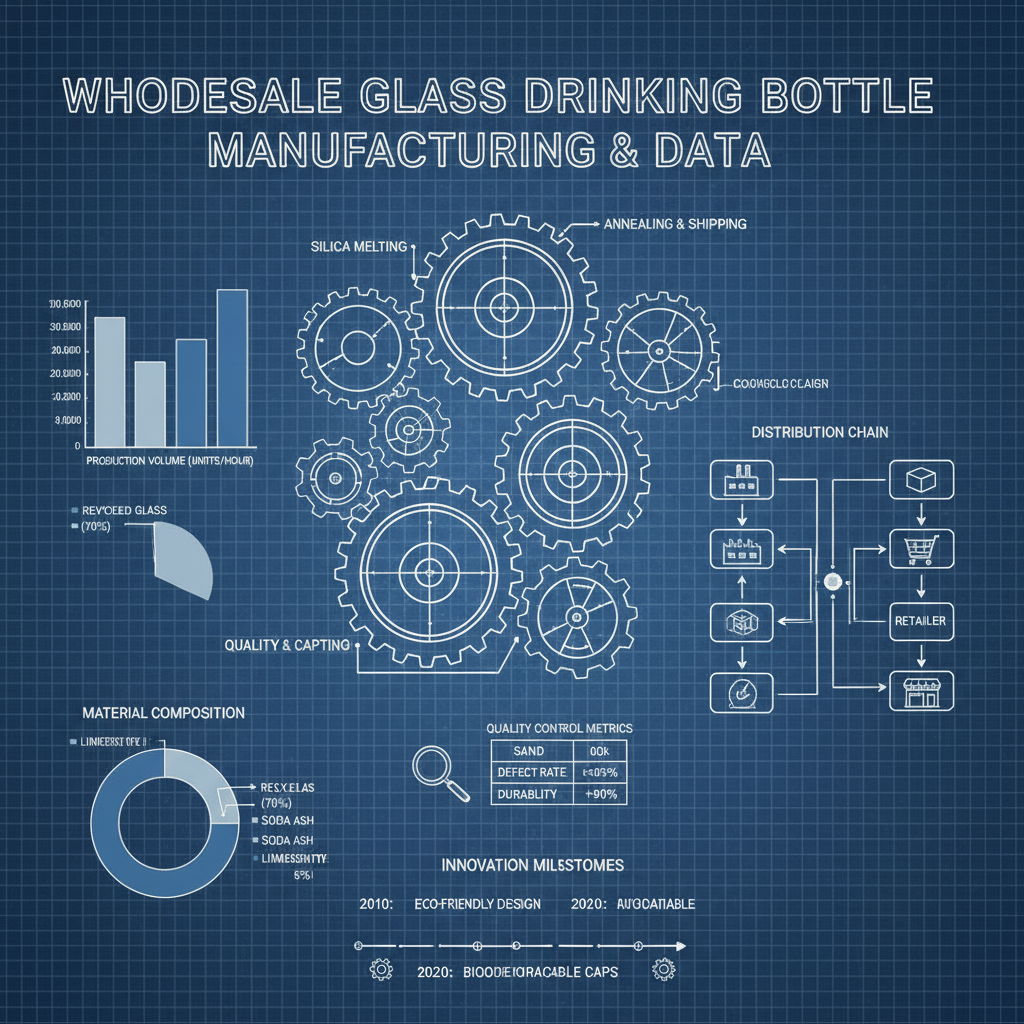
Several core factors influence the quality and cost-effectiveness of wholesale glass drinking bottles. Durability is paramount; bottles must withstand repeated use, washing cycles, and transportation without cracking or breaking. The composition of the glass itself, including the addition of stabilizing agents, directly impacts its resilience. Secondly, Scalability of production is vital for meeting large order demands efficiently and consistently.
Cost Efficiency is crucial for remaining competitive in the market. This involves optimizing manufacturing processes, sourcing raw materials strategically, and streamlining logistics. Reducing energy consumption during production and minimizing waste are also key to achieving cost savings. The fourth critical factor is Design Flexibility, allowing for customization to meet diverse branding requirements. Suppliers must be capable of producing bottles in various shapes, sizes, and colors, and incorporating logos, embossing, or other decorative elements.
Finally, Quality Control is essential. Rigorous inspection processes throughout the production cycle, from raw material sourcing to finished product packaging, are necessary to ensure bottles meet industry standards and customer specifications. This includes checks for defects, dimensional accuracy, and resistance to thermal shock. Compliance with relevant safety and environmental regulations is also a critical aspect of quality control.
Global Applications of Wholesale Glass Drinking Bottles
Wholesale glass drinking bottles find widespread application across numerous industries globally. The beverage industry, encompassing breweries, wineries, and soft drink manufacturers, is a primary consumer. In Europe, particularly Germany and Italy, glass bottles are the preferred packaging for beer and wine due to their ability to maintain flavor and carbonation. North America also sees substantial demand, with craft breweries increasingly favoring glass for its premium image.
Beyond beverages, glass bottles are also used for packaging juices, sauces, and other food products. In regions like Southeast Asia, where street food culture is prevalent, small-batch producers often utilize glass bottles for offering fresh juices and drinks. Furthermore, the cosmetic and pharmaceutical industries utilize specialized glass bottles for packaging perfumes, essential oils, and liquid medications, requiring stringent quality control and purity standards.
In post-disaster relief operations, durable glass bottles can be invaluable for providing safe drinking water. The reusability of these bottles reduces the need for disposable plastic alternatives, minimizing environmental impact in challenging situations. In remote industrial zones, where access to clean water sources is limited, wholesale glass drinking bottles are used for storing and transporting purified water, ensuring worker health and safety.
Comparison of Wholesale Glass Drinking Bottle Production Methods
Advantages & Long-Term Value Proposition
The advantages of using wholesale glass drinking bottles extend beyond mere packaging. From a cost perspective, while the initial investment may be higher than plastic alternatives, the reusability of glass significantly reduces long-term packaging expenses. Sustainability is a major draw, as glass is 100% recyclable without loss of quality. This appeals to environmentally conscious consumers and supports circular economy principles.
The emotional appeal of glass packaging also contributes to its value. Glass conveys a sense of premium quality and craftsmanship, enhancing brand perception. Logically, the inert nature of glass protects beverage flavor and purity, leading to a superior product experience. This builds trust with consumers and fosters brand loyalty. Furthermore, glass is inherently safe, avoiding the potential for harmful chemical leaching associated with some plastics.
Future Trends and Innovations
Several trends are shaping the future of wholesale glass drinking bottles. Lightweighting technology is reducing the weight of glass bottles without compromising strength, leading to lower transportation costs and reduced carbon footprint. Smart glass technology, incorporating embedded sensors, is emerging, allowing for tracking of bottle location and temperature, enhancing supply chain management and product quality control.
Sustainable manufacturing practices are also gaining prominence, with increased use of recycled glass (cullet) in production and adoption of renewable energy sources in factories. Digital printing techniques are enabling more complex and customized bottle designs, offering greater branding flexibility. The increasing focus on closed-loop systems, where bottles are collected, cleaned, and reused, is further driving sustainability efforts.
Challenges & Solutions in Wholesale Supply
Despite the benefits, the wholesale glass drinking bottles industry faces several challenges. Fragility remains a significant concern, leading to breakage during transportation and handling. Solutions include improved packaging materials, optimized palletization techniques, and robust logistics management. The high energy consumption associated with glass production is another challenge.
Addressing this requires investment in energy-efficient furnaces and the utilization of renewable energy sources. Competition from alternative packaging materials, particularly plastics, poses an ongoing threat. Highlighting the sustainability benefits of glass and emphasizing its superior quality and safety are crucial for maintaining market share. Finally, fluctuating raw material prices can impact production costs. Establishing long-term supply contracts and diversifying sourcing options can mitigate this risk.
Effective inventory management is essential for minimizing waste and ensuring timely fulfillment of orders. Implementing advanced forecasting techniques and utilizing data analytics can help optimize stock levels and reduce the risk of obsolescence. Collaboration between suppliers, manufacturers, and distributors is also key to streamlining the supply chain and enhancing overall efficiency.
Summary of Key Challenges and Solutions in Wholesale Glass Drinking Bottle Supply
| Challenge |
Impact on Wholesale Operations |
Proposed Solution |
Implementation Cost (1-10) |
| Bottle Breakage During Transport |
Increased Loss, Higher Shipping Costs |
Improved Packaging, Secure Palletization |
6 |
| High Energy Consumption |
Elevated Production Costs, Environmental Impact |
Energy-Efficient Furnaces, Renewable Energy |
8 |
| Competition from Plastics |
Reduced Market Share, Price Pressure |
Highlighting Sustainability, Superior Quality |
5 |
| Fluctuating Raw Material Costs |
Unpredictable Production Expenses |
Long-Term Contracts, Diversified Sourcing |
7 |
| Inventory Management Challenges |
Waste, Storage Costs, Order Fulfillment Delays |
Advanced Forecasting, Data Analytics |
4 |
| Supply Chain Disruptions |
Delays, Shortages, Increased Costs |
Supplier Diversification, Risk Mitigation Plans |
7 |
FAQS
Lead times for wholesale glass drinking bottles can vary significantly depending on the quantity, customization requirements, and current production capacity. Generally, standard bottles in stock may ship within 2-4 weeks. However, customized bottles or very large orders can require 8-12 weeks or more. It's crucial to confirm lead times with your supplier during the quotation process, factoring in potential delays for mold creation or specialized finishes. Careful planning and early ordering are essential to avoid disruptions.
Reputable wholesale suppliers implement rigorous quality control measures throughout the entire manufacturing process. This includes inspection of raw materials for purity and consistency, dimensional checks during forming, visual inspection for defects like cracks or bubbles, and leak tests to ensure seal integrity. Many suppliers also utilize automated inspection systems for increased accuracy and efficiency. Certifications like ISO 9001 demonstrate a commitment to quality management systems.
Yes, most wholesale suppliers offer customization options for glass drinking bottles. This can include custom shapes, sizes, colors, and surface treatments. Branding options typically include screen printing, hot stamping, labeling, and embossing. However, customization often requires a minimum order quantity and may incur additional tooling costs for mold creation. It's essential to provide detailed artwork and specifications to the supplier for accurate quotation and production.
Shipping options for wholesale glass drinking bottles typically include ocean freight, air freight, and ground transportation. Ocean freight is the most cost-effective option for large volumes and long distances, but it has longer transit times. Air freight is faster but significantly more expensive. Ground transportation is suitable for shorter distances and smaller orders. Shipping costs depend on the weight, volume, destination, and chosen carrier. It's best to request a shipping quote from the supplier based on your specific order details.
The minimum order quantity (MOQ) varies considerably among wholesale suppliers and depends on factors like bottle type, customization, and the supplier's production capabilities. Generally, MOQs can range from a few thousand bottles for standard designs to tens of thousands for customized options. Suppliers often have different MOQs for in-stock items versus made-to-order products. It's crucial to clarify the MOQ before placing an order.
Glass is 100% recyclable and can be recycled endlessly without loss of quality. Most reputable wholesale suppliers actively promote glass recycling and may have sustainability policies in place. These policies can include using recycled glass (cullet) in production, minimizing energy consumption, reducing waste, and implementing responsible sourcing practices. Inquire about the supplier’s specific sustainability initiatives to ensure alignment with your own environmental goals.
Conclusion
In conclusion, wholesale glass drinking bottles represent a dynamic and increasingly important market driven by sustainability concerns, consumer preferences, and stringent regulations. The benefits extend beyond mere packaging, encompassing cost efficiency, brand enhancement, and a commitment to environmental responsibility. Successfully navigating this market requires a comprehensive understanding of production factors, global applications, and emerging trends.
Looking ahead, continued innovation in lightweighting, smart glass technology, and sustainable manufacturing processes will further solidify the position of glass as a preferred packaging material. Businesses that prioritize quality control, embrace customization options, and adopt proactive supply chain management strategies will be well-positioned to thrive in this evolving landscape. For reliable wholesale glass drinking bottles, visit our website today!
 TEL: +86 18903393212
 Email: tina@yintoglassware.com